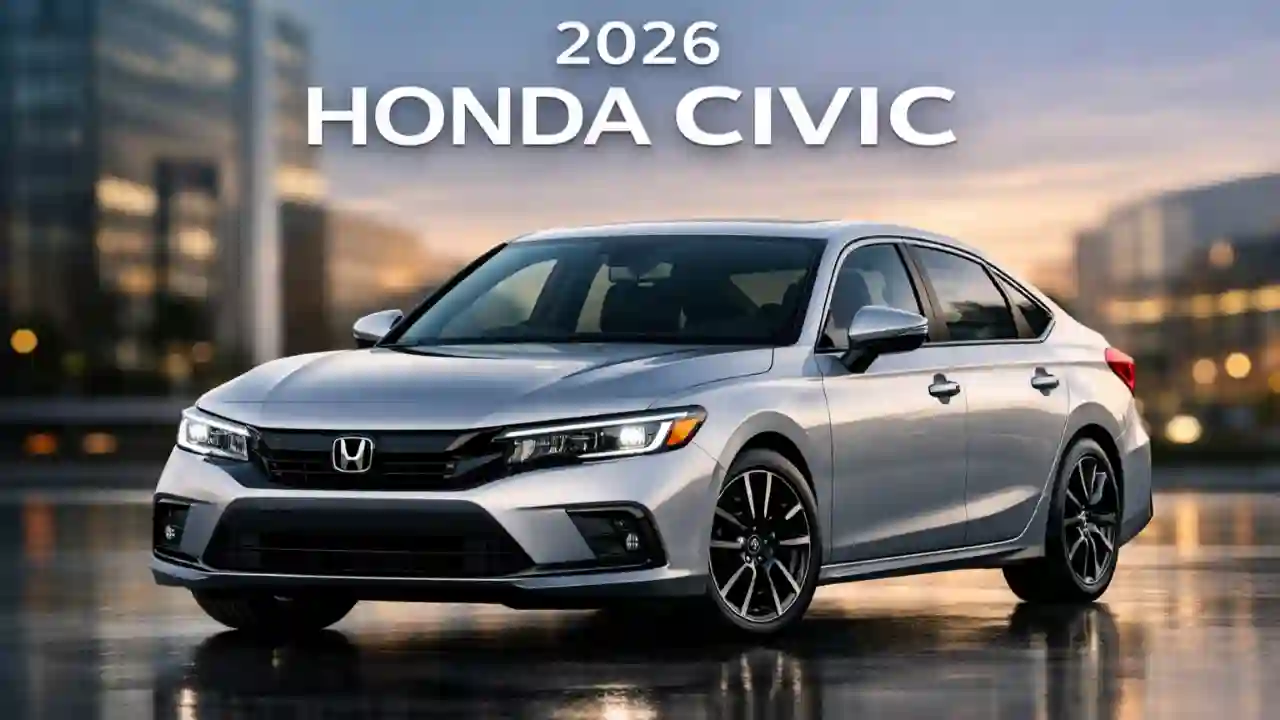
The 2026 Honda Civic continues the enduring legacy of one of the world’s best-known compact cars with a model year that emphasises refinement over reinvention. Honda’s eleventh generation Civic, which has been in production globally since 2022, carries forward into 2026 with a blend of updated styling, improved hybrid technology and a strong safety feature set. The Civic remains a key competitor in the compact sedan and hatchback segments globally, appealing to both everyday drivers and buyers looking for efficiency, practicality and modern technology.
Since its introduction, the eleventh generation Civic has benefited from incremental updates that enhance its appeal without dramatically altering its character. The 2026 iteration does not represent a full redesign but rather an evolution that refines exterior styling, expands hybrid powertrain availability and incorporates contemporary infotainment and driver assistance systems. These developments help the Civic stay relevant in a segment that is becoming increasingly competitive with newer rivals from Asian and European manufacturers.
Exterior and Design Refinements
The visual identity of the 2026 Civic reflects a modern interpretation of Honda’s compact car design language. The front fascia, while recognisably Civic, features sleeker LED headlamps and a subtly refreshed grille layout that give it a cleaner, more contemporary look. Body panels are slightly more sculpted with nuanced aerodynamic contours, and new alloy wheel designs are offered across trim levels. These changes, though understated, contribute to a more premium on-road presence compared to previous years. Honda has also introduced additional exterior colour options to allow buyers a broader choice when personalising their car.
The overall silhouette remains athletic without being aggressive. A gently rising beltline and balanced proportions help maintain the Civic’s reputation for practical everyday use while providing a confident stance. Hatchback and sedan body styles continue to be offered in markets where both are available, with the liftback version attracting buyers seeking added practicality without moving to a larger vehicle class.
Powertrain and Hybrid Efficiency
One of the most significant aspects of the 2026 Civic is its focus on hybrid technology. The two-motor hybrid system paired with a 2.0-litre four-cylinder engine delivers a total output of around 200 horsepower and torque in the region of 232 pound-feet. This powertrain setup combines responsive acceleration with excellent fuel efficiency, making it a compelling choice for buyers prioritising lower running costs and reduced emissions. The two-motor hybrid arrangement has received industry recognition for its balance of performance and economy, winning awards in engineering and propulsion categories.
Traditional internal combustion engine options remain available in markets where hybrid adoption is still emerging, providing buyers with petrol-only choices tuned for reliability and smooth daily performance. The Civic’s continuously variable transmission (CVT) ensures gradual and efficient power delivery, though hybrid variants often present a more refined and quicker response in urban stop-and-go conditions.
Interior and Technology Upgrades
Inside, the Civic’s cabin continues to emphasise comfort and usability. Materials quality has been improved in select trims to create a more upscale feel without pushing the car out of its expected price range. The dashboard layout remains logical and ergonomic, placing frequently used controls within easy reach of the driver. Rear passenger space is generous for the segment, while trunk capacity remains competitive for everyday errands or longer trips.
Infotainment is a clear area of advancement for the 2026 model. All variants now come with a modern touchscreen interface featuring Google built-in functionality, which provides seamless integration with Android services and a suite of connected apps. Wireless Apple CarPlay and Android Auto are included on higher trims, improving smartphone connectivity without the clutter of cables. Digital instrumentation is available in select models, providing crisp and clear driving information. These technology features align the Civic with contemporary expectations for connectivity and convenience.
Safety and Driver Assistance
Honda has equipped the 2026 Civic with its comprehensive Honda Sensing suite of driver assistance technologies as standard across most markets. This package includes adaptive cruise control, lane keeping assist, collision mitigation braking and road departure mitigation systems. Traffic sign recognition and automatic high beam control are also offered, enhancing driver confidence on long journeys and in heavy traffic. The integration of these systems reflects Honda’s ongoing commitment to safety and helps the Civic achieve strong perception scores in safety benchmarks.
Market Positioning and Pricing
While exact pricing varies by region, base models of the 2026 Civic in some key markets start from a competitive point that reflects its class-leading attributes. In the United States, the entry-level sedan begins around the mid-$20,000 range, with hybrid and premium trims priced higher according to added features and powertrain sophistication. Sportier variants such as the Civic Si and the high-performance Civic Type R continue to attract enthusiasts, though pricing for these models reflects their specialised nature and performance focus.
The Civic has long been regarded as a benchmark for reliability and resale value. Consumer reviews and expert evaluations frequently highlight its low cost of ownership and broad usability. With the 2026 model year, Honda appears to have struck a balance between evolving consumer expectations and maintaining what core buyers appreciate most about the vehicle.
Global Context and Future Prospects
The 2026 Civic arrives at a time when the global automotive market is rapidly shifting towards electrification. Honda itself has outlined broader electrification strategies that include more hybrid and battery electric models in the coming years. The Civic will likely continue to serve as a pivotal platform for Honda’s transition, especially in markets where hybrid adoption is becoming more mainstream. Its proven design and technological improvements position it well against competitors offering higher levels of electrification and advanced features.
Looking ahead, the Civic’s future iterations may include further electrified variants or even expanded all-electric versions as battery technology and infrastructure improve. For now, the 2026 model year represents a mature and well-rounded choice for buyers seeking a versatile compact car that delivers on performance, comfort and everyday value.