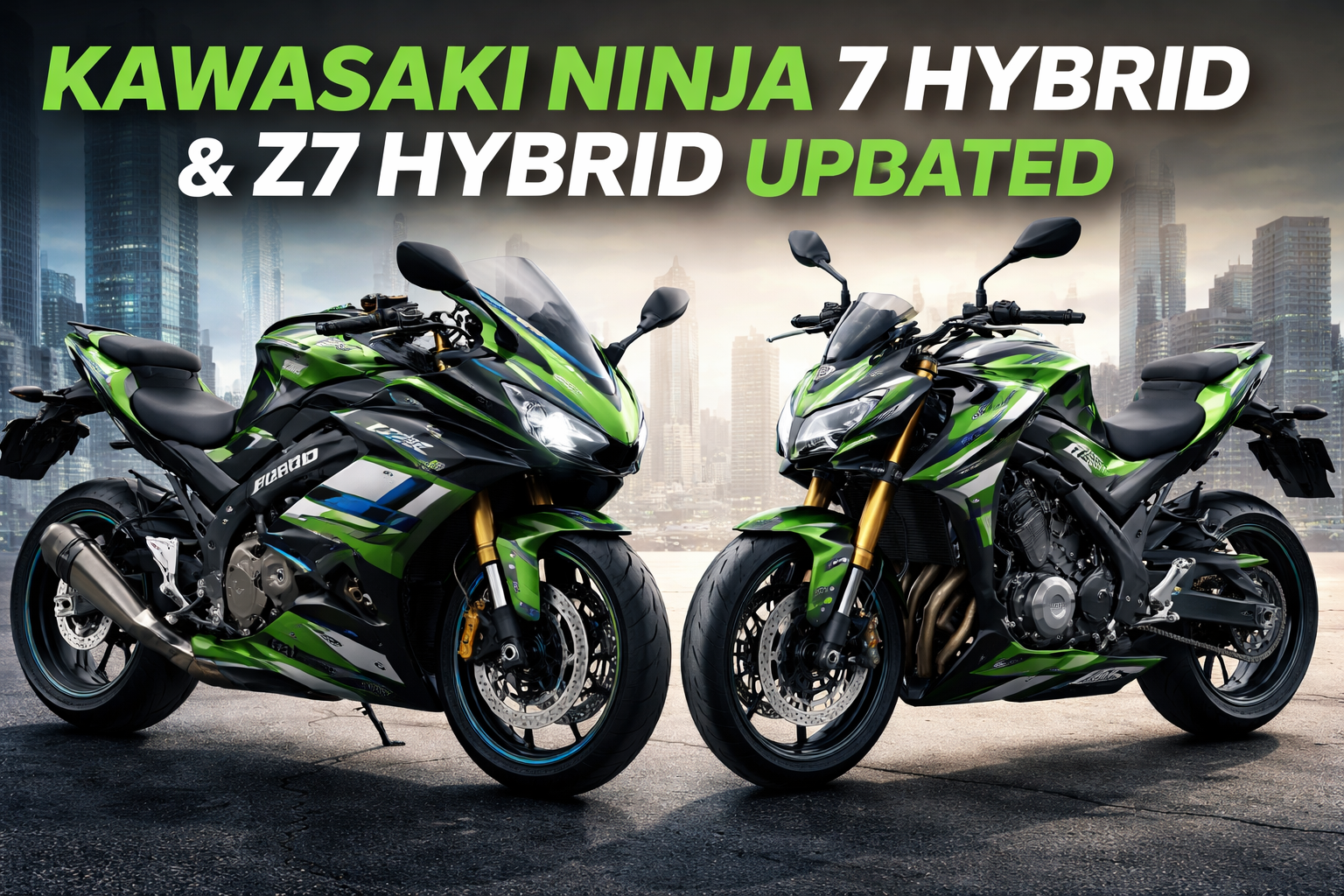
Kawasaki Ninja 7 Hybrid and Z7 Hybrid Updated: A New Era of Hybrid Performance Bikes
The motorcycle industry is entering a new phase where performance is no longer just about engine size and horsepower. With the updated Kawasaki Ninja 7 Hybrid and Kawasaki Z7 Hybrid, Kawasaki has taken a bold step toward combining power with efficiency. These hybrid motorcycles are designed for riders who want strong performance without compromising on fuel economy and environmental responsibility.
Introduction to Kawasaki’s Hybrid Innovation
Kawasaki has become one of the first major manufacturers to introduce hybrid technology in mid-range performance motorcycles. Unlike electric bikes that rely entirely on batteries, these hybrid models combine a petrol engine with an electric motor. This dual system allows riders to enjoy the benefits of both worlds—traditional power and modern efficiency.
The updated versions of the Ninja 7 Hybrid and Z7 Hybrid focus on better performance tuning, smoother riding dynamics, and improved energy management systems.
How the Hybrid System Works
The hybrid system used in these bikes is designed to offer flexibility and control. It allows the motorcycle to operate in multiple modes depending on the riding condition:
EV Mode (Electric Only): Ideal for short city rides, offering silent operation and zero emissions
Hybrid Mode: Combines engine and motor for balanced performance and fuel efficiency
Boost Mode: Delivers maximum power by using both systems together
This intelligent system automatically adjusts power delivery, making the ride smoother and more efficient without requiring constant manual input.
Engine and Performance Capabilities
At the core of these bikes is a compact petrol engine supported by an electric motor that provides instant torque. This setup improves acceleration, especially at lower speeds where traditional engines may lag.
The updated models are expected to deliver:
Faster throttle response
Smooth and seamless gear transitions
Enhanced acceleration due to electric assist
Reduced vibration compared to conventional bikes
For city riders, this means less stress in traffic, while highway riders benefit from better overtaking power.
Advanced Transmission and Riding Features
One of the standout features of these hybrid motorcycles is the advanced transmission system. Kawasaki has integrated automatic and semi-automatic options, making the bike easier to ride for both beginners and experienced riders.
Additional features may include:
Digital TFT display with hybrid system data
Smartphone connectivity
Riding mode selection
Regenerative braking system to recharge the battery
These features make the bike not just powerful, but also smart and user-friendly.
Design and Styling: Sporty Meets Futuristic
Kawasaki has maintained its aggressive styling while adding modern touches to reflect the hybrid technology.
Ninja 7 Hybrid Design
The Kawasaki Ninja 7 Hybrid features a fully-faired design inspired by supersport bikes. Its aerodynamic bodywork, sharp LED headlights, and sporty stance make it visually striking.
Z7 Hybrid Design
The Kawasaki Z7 Hybrid follows a naked streetfighter design. It offers a muscular look with exposed elements, upright riding posture, and a bold front profile.
Both models feature premium finishes and a futuristic appeal that stands out on the road.
Fuel Efficiency and Environmental Benefits
One of the biggest advantages of hybrid motorcycles is improved fuel efficiency. The electric motor reduces the workload on the petrol engine, resulting in:
Lower fuel consumption
Reduced emissions
Better performance in stop-and-go traffic
For daily commuters, this translates into long-term savings on fuel costs. At the same time, it contributes to a cleaner environment, which is becoming increasingly important in modern cities.
Practical Benefits for Daily Riders
These hybrid bikes are not just about innovation—they are built for real-world usability.
City Commuting: EV mode makes short trips quiet and cost-effective
Long Rides: Hybrid mode ensures a balance of power and efficiency
Fuel Savings: Reduced dependency on petrol lowers overall expenses
This makes the Ninja 7 Hybrid and Z7 Hybrid suitable for a wide range of riders.
Expected Price and Market Position
Hybrid technology is still relatively new in motorcycles, so these models are expected to be priced slightly higher than conventional bikes in the same segment. However, Kawasaki is likely targeting riders who value innovation and long-term savings.
In markets like India, these bikes could attract enthusiasts looking for something unique and future-ready.
Future of Hybrid Motorcycles
The launch and updates of these models indicate a larger shift in the motorcycle industry. As emission regulations become stricter and fuel prices continue to rise, hybrid motorcycles could become more common.
Manufacturers are likely to invest more in hybrid and electric technologies, making bikes more efficient without sacrificing performance.
Final Verdict
The updated Kawasaki Ninja 7 Hybrid and Kawasaki Z7 Hybrid represent a major step forward in motorcycle innovation. They successfully combine performance, efficiency, and modern technology into a single package.
For riders who want a mix of power, fuel savings, and futuristic features, these hybrid bikes are definitely worth considering. As technology continues to evolve, models like these could shape the future of motorcycling and redefine what performance really means.