
- 1. Why Investing Early Matters
- 2. Set Clear Financial Goals
- 3. Build an Emergency Fund First
- 4. Start With Small but Consistent Investments
- 5. Consider Low-Cost Index Funds
- 6. Use Investment Apps and Online Platforms
- 7. Diversify Your Investments
- 8. Avoid High-Risk Speculation
- 9. Focus on Long-Term Growth
- 10. Continue Learning About Investing
- 11. Final Thoughts
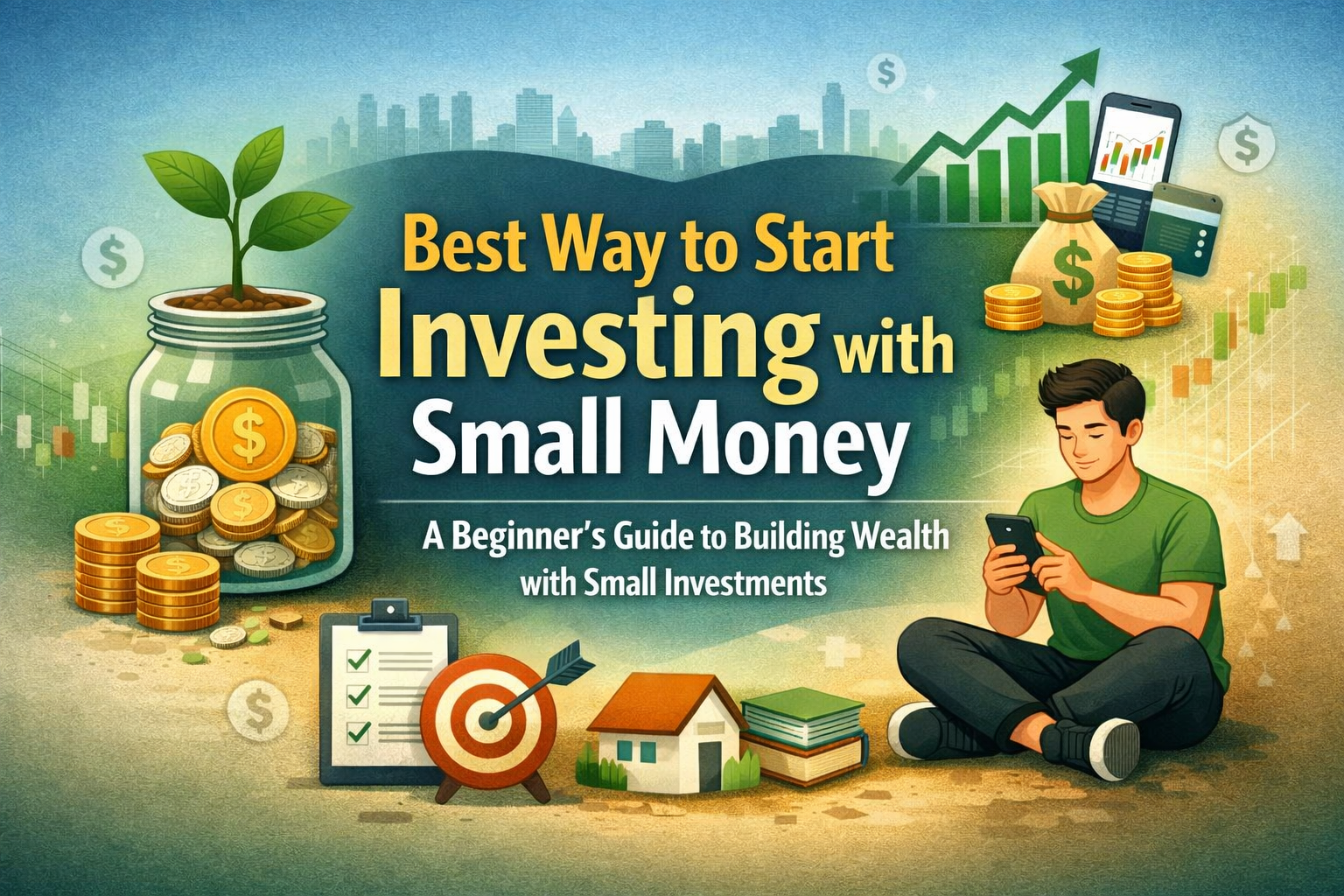
Many people believe that investing requires a large amount of money. In reality, you can begin building wealth even with a small amount if you follow the right strategy. Modern financial platforms and investment options have made it easier than ever for beginners to start investing with limited funds. The key is to understand where to start, how to manage risk, and how to grow your money gradually over time.
This guide explains the best way to start investing with small money, including practical strategies that beginners can use to build long-term financial growth.
Why Investing Early Matters
Starting early is one of the most powerful advantages in investing. Even small amounts can grow significantly over time due to compounding. Compounding means your investment generates returns, and those returns generate additional returns.
For example, investing a small amount regularly can create a much larger portfolio over several years. Instead of waiting until you have a large amount of money, starting early allows your investments to grow steadily.
Set Clear Financial Goals
Before investing any money, it is important to define your goals. Different investment goals require different strategies.
Common financial goals include:
-
Building long-term wealth
-
Saving for retirement
-
Creating passive income
-
Saving for major expenses such as buying a house or education
When your goals are clear, you can choose investments that match your timeline and risk tolerance.
Build an Emergency Fund First
A common mistake beginners make is investing money they may need in the short term. Before investing, it is wise to create an emergency fund.
An emergency fund usually covers three to six months of living expenses. This ensures that unexpected costs such as medical bills, repairs, or job loss do not force you to withdraw investments early.
Once you have basic financial security, you can start investing confidently.
Start With Small but Consistent Investments
One of the best strategies for beginners is investing small amounts regularly instead of waiting to invest a large amount.
This method has several advantages:
-
It reduces financial pressure
-
It builds a consistent investment habit
-
It reduces the impact of market volatility
Even small monthly investments can grow significantly over time when combined with patience and discipline.

Consider Low-Cost Index Funds
Index funds are one of the most beginner-friendly investment options. These funds track the performance of a market index and allow investors to gain exposure to many companies at once.
Benefits of index funds include:
-
Low management fees
-
Built-in diversification
-
Simple long-term strategy
Because they spread investments across many companies, they help reduce the risk associated with individual stocks.
Use Investment Apps and Online Platforms
Technology has made investing accessible for people with limited capital. Many online investment platforms allow users to start investing with very small amounts.
These platforms often offer:
-
Fractional share investing
-
Automated portfolio management
-
Educational tools for beginners
Fractional shares allow investors to buy a portion of expensive stocks instead of purchasing a full share.
Diversify Your Investments
Diversification is a strategy that spreads investments across multiple asset types to reduce risk.
Instead of putting all your money into a single investment, beginners should consider a mix such as:
-
Stocks
-
Index funds
-
Exchange-traded funds
-
Bonds or fixed income investments
Diversification protects your portfolio if one investment performs poorly.
Avoid High-Risk Speculation
New investors are often tempted by quick-profit opportunities. However, high-risk speculation can lead to large losses, especially for beginners.

Examples of risky behavior include:
-
Trying to time the market
-
Investing in unknown or hype-driven assets
-
Trading frequently without knowledge
A long-term strategy focused on stable investments usually produces better results.
Focus on Long-Term Growth
Successful investing requires patience. Market fluctuations are normal, and short-term volatility should not discourage investors.
Long-term investors typically focus on:
-
Consistent investing
-
Portfolio diversification
-
Reinvesting returns
Over time, disciplined investing can produce significant financial growth.
Continue Learning About Investing
Financial knowledge plays a major role in investment success. Beginners should continuously improve their understanding of markets and investment strategies.
Helpful learning methods include:
-
Reading finance books and guides
-
Following trusted financial websites
-
Studying investment strategies
-
Learning about risk management
Better knowledge helps investors make smarter decisions and avoid costly mistakes.
Final Thoughts
The best way to start investing with small money is to begin early, invest consistently, and focus on long-term growth. You do not need a large amount of capital to begin building wealth. By choosing simple investment options, diversifying your portfolio, and avoiding unnecessary risks, even small investments can grow into substantial financial assets over time.
The most important step is simply getting started. With patience, discipline, and continuous learning, small investments today can lead to strong financial security in the future.