
- 1. Design Approach Focused on Modern City Riders
- 2. Build Quality Designed for Daily Use
- 3. Smooth and Silent Electric Motor Performance
- 4. Battery Technology and Claimed 300KM Range
- 5. Charging Convenience for Urban Lifestyles
- 6. Smart LED Display and Intelligent Features
- 7. Ride Comfort Tailored for City Roads
- 8. Safety Elements That Inspire Confidence
- 9. Low Maintenance and Cost Efficiency
- 10. Budget-Friendly Positioning and EMI Expectations
- 11. Yamaha’s Vision for Urban Electric Mobility
- 12. Conclusion
Yamaha Electric Cycle 2026:The shift toward electric mobility is accelerating across cities, and lightweight electric vehicles are becoming a practical answer to everyday commuting challenges. In this changing landscape, **Yamaha** has drawn significant attention with the Yamaha Electric Cycle 2026. The model has been trending across digital platforms due to its ambitious range claim, fast charging capability, and positioning as a budget-friendly yet premium-looking urban electric cycle.
Urban commuters today face rising fuel prices, traffic congestion, and increasing maintenance costs. As a result, many are actively searching for alternatives that are affordable, eco-friendly, and easy to use. The Yamaha Electric Cycle 2026 is designed to address these exact concerns, offering a petrol-free solution without compromising on comfort, style, or daily usability.
Design Approach Focused on Modern City Riders
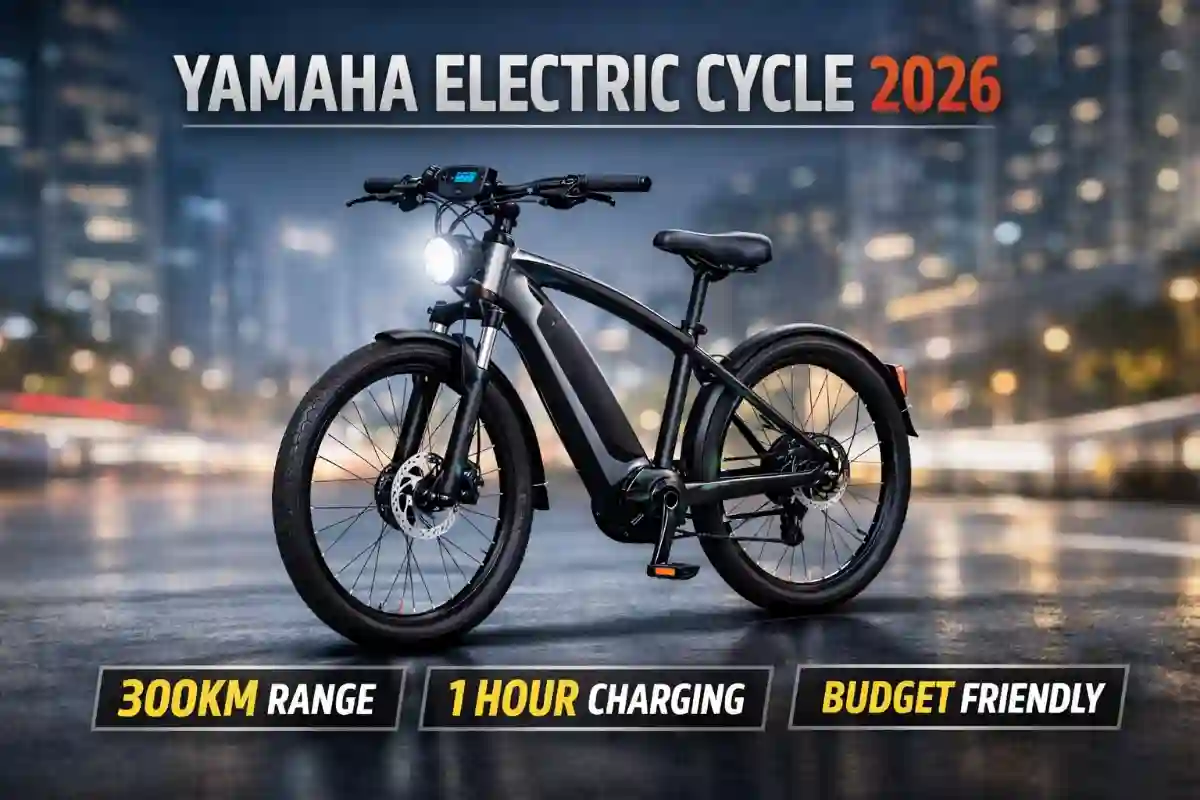
The Yamaha Electric Cycle 2026 reflects a design philosophy that balances practicality with a refined urban appearance. The overall styling is clean and contemporary, avoiding unnecessary visual clutter. Its proportions are well-balanced, making it suitable for riders of different age groups and daily use patterns.
A strong yet lightweight alloy frame forms the foundation of the cycle. This construction not only improves durability but also keeps overall weight in check, which is important for maneuvering through traffic or carrying the cycle into parking spaces. The riding posture has been carefully considered, with an ergonomic handlebar and a wide, cushioned seat that supports longer commutes without discomfort.
Integrated LED headlamp and tail lamp units add both visual appeal and functionality. These lighting elements enhance visibility during early morning or night rides, making the cycle safer for urban environments.
Build Quality Designed for Daily Use
For an electric cycle meant for everyday commuting, build quality plays a crucial role. Yamaha appears to have focused on long-term usability rather than short-term aesthetics. The joints, fittings, and overall frame finish are designed to handle regular wear and tear commonly associated with city roads.
The lightweight structure allows riders to navigate narrow streets and crowded traffic conditions with ease. It also simplifies storage at home or offices, which is a key requirement for many urban users. This practical build makes the cycle suitable for students, office commuters, and even delivery professionals who rely on consistent performance.
Smooth and Silent Electric Motor Performance
At the heart of the Yamaha Electric Cycle 2026 is a high-efficiency hub motor engineered for smooth and quiet operation. In city conditions where frequent stops and starts are unavoidable, instant torque delivery becomes an important advantage. The motor responds quickly, making acceleration feel effortless without sudden jerks.
The electric assistance reduces the need for heavy pedaling, especially on flyovers or mild inclines. This feature is particularly useful for beginners or riders who prefer a relaxed riding experience. The pedal assist system has been kept simple, allowing new users to adapt quickly without a steep learning curve.
Another notable aspect is the low noise level. The near-silent operation makes the cycle comfortable to ride in residential areas and during off-peak hours.

Battery Technology and Claimed 300KM Range
One of the most discussed highlights of the Yamaha Electric Cycle 2026 is its claimed riding range of up to 300 kilometers. This figure is expected to be achievable in eco mode, where power output is optimized for maximum efficiency.
The advanced lithium-ion battery is securely integrated within the frame, contributing to better weight distribution and improved balance. This placement enhances stability while riding and also adds a layer of protection to the battery itself.
Fast charging capability further strengthens the cycle’s appeal. According to available details, the battery can be fully charged in approximately one hour. For daily commuters, this significantly reduces downtime and makes the cycle more practical for routine use.
Charging Convenience for Urban Lifestyles
Charging simplicity is a key requirement for electric mobility in cities, and Yamaha seems to have prioritized this aspect. The electric cycle can be charged using a standard household power socket, eliminating the need for specialized charging infrastructure.
The short charging time allows riders to recharge the battery during work hours, breaks, or overnight with ease. Battery safety systems and thermal management features are designed to support consistent performance and long-term reliability.
Smart LED Display and Intelligent Features
The Yamaha Electric Cycle 2026 incorporates a smart LED digital display that provides essential riding information at a glance. Riders can easily monitor speed, battery status, estimated range, and selected riding mode without distraction.
The display is optimized for outdoor visibility, ensuring clarity even under bright sunlight. Intelligent power management works in the background to maintain efficiency across different riding conditions.
Additional features such as regenerative braking contribute to improved energy utilization. While the recovered energy may be modest, it helps extend overall battery life during frequent stop-and-go city riding.
Ride Comfort Tailored for City Roads
Comfort remains a priority for a cycle intended for daily commuting. The Yamaha Electric Cycle 2026 features a front suspension system that absorbs shocks from uneven roads and speed breakers. This helps reduce fatigue during longer rides.
Wide tires improve road grip and stability, especially on wet or uneven surfaces. The combination of suspension, tire width, and balanced frame geometry results in a smoother and more controlled riding experience across different urban road conditions.

Safety Elements That Inspire Confidence
Urban traffic demands reliable safety features, and Yamaha has equipped this electric cycle with essential elements to support confident riding. A dependable braking system ensures controlled stopping power in sudden situations.
Bright LED lighting enhances visibility for both the rider and surrounding traffic. The overall frame balance and riding posture further contribute to stability, reducing the risk of loss of control during sharp turns or crowded traffic scenarios.
Low Maintenance and Cost Efficiency
One of the strongest advantages of electric cycles lies in their low maintenance requirements. The Yamaha Electric Cycle 2026 benefits from fewer mechanical components compared to conventional fuel-powered vehicles. This translates into reduced servicing costs over time.
With no fuel expenses and minimal routine maintenance, the total cost of ownership remains low. The battery and motor systems are designed with protective sealing to reduce damage from dust and water exposure, supporting long-term use in varied conditions.
Budget-Friendly Positioning and EMI Expectations
Yamaha has positioned the Electric Cycle 2026 with affordability in mind. While official pricing details are yet to be fully confirmed, expectations point toward competitive pricing supported by easy EMI options and low initial payment requirements.
This approach makes the cycle accessible to students, young professionals, and budget-conscious commuters. When combined with zero fuel costs and low maintenance expenses, the electric cycle presents a financially sensible alternative for daily travel.
Yamaha’s Vision for Urban Electric Mobility
The Yamaha Electric Cycle 2026 reflects a broader vision focused on sustainable and efficient urban transportation. Lightweight electric vehicles are gaining momentum as cities look for solutions to reduce congestion and pollution.
By emphasizing usability, comfort, and affordability, Yamaha aims to make electric mobility more approachable for everyday riders. If real-world performance aligns with expectations, this electric cycle could play a meaningful role in shaping the future of city commuting.
Conclusion
The Yamaha Electric Cycle 2026 stands out due to its combination of long claimed range, fast charging capability, smart features, and practical urban design. It addresses the core needs of modern commuters who seek an economical, eco-friendly, and easy-to-use mobility solution.
As official specifications and on-road performance details become clearer, the true value of this electric cycle will be better understood. For now, it represents a promising step toward cleaner and more efficient urban travel, making it an option worth watching for city riders looking to move beyond traditional fuel-powered transport.